
Since 1847
History
The history of Casa Moreira is long. It begins in 1847, in Moreira da Maia, and reaches the present day without a break: a tradition of funeral service exercised, generation after generation, by the Moreira family, in the same place where the Casa was founded and where it remains. It is probably one of the oldest funeral homes still operating in Portugal.
1847 — 1896
The Foundation
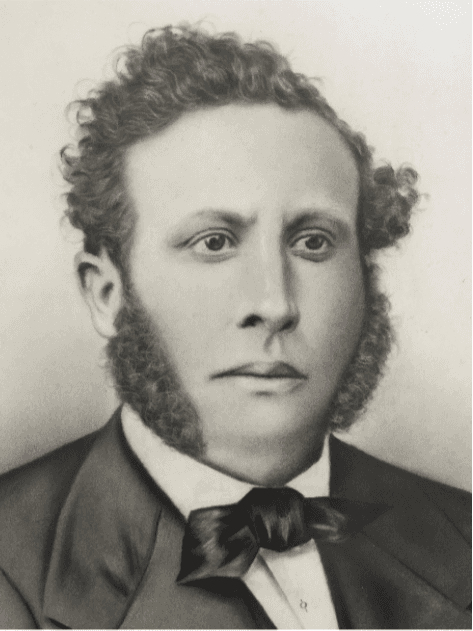
Domingos José Moreira, “o Clara”
Born: 13.07.1828Died: 22.09.1896
1st generation · Founder of Casa Moreira
In brief
Domingos José Moreira, “o Clara”, was born on 13 July 1828 in the hamlet of Real, in Moreira da Maia, and founded the Casa de Armação and the Banda de Música — two institutions born of the same wish to give solemnity to festive and funeral ceremonies. A carpenter, church furnisher (armador), musician, farmer, and wax-chandler, he came from modest origins and built a craft house already recognised in his time, with rich ceremonial equipment for celebration and mourning, first on the ground floor and in the cellar of the family home. He designed a monumental gilded funeral bier, carried on eight ox carts and used for the last time in 1957, at his grandson’s funeral. Married to Maria de Jesus, he left descendants and turned a personal enterprise into a family legacy. He died in 1896, aged 68, during a solemn mass while conducting the band and choir he had founded. The manuscript of Father Joaquim Antunes de Azevedo, still in the nineteenth century, describes him as an armador, master of music, and man of entrepreneurial spirit.
From the manuscript
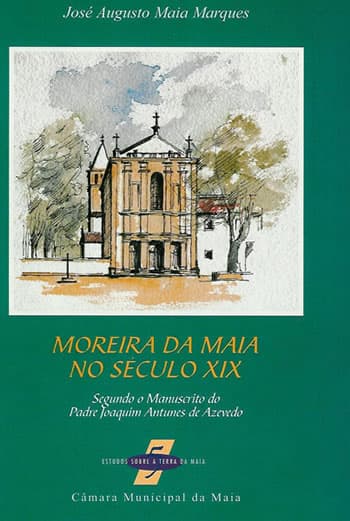
“É natural d’esta aldeia Domingos José Moreira, lavrador, Muzico, Armador, cerieiro, e no seu principio carpinteiro nasceu elle n’uma casa do mesmo logar que fica ao Nascente d’onde hoje reside, junto d’um tanque de lavar que é do caseiro que foi por muitos anos da quinta do Calheiros d’aquella freguezia, onde este tem também a sua casa com janellas de sacada, e o tanque do outro lado do caminho na frente da casa, ficando a referida casa onde elle nasceu em 1827 da parte do Norte e em frente do tanque metendo-se o caminho publico de permeio…”
(p. 62)“Há também boa música, que forma uma capela, dirigida pelo hábil mestre Domingos José Moreira, natural de Moreira, que também tem uma boa armação de Igreja.”
(p. 32)“Os armadores mais notaveis são o do logar do Carvalhido freguezia de Moreira, Domingos José Moreira (o Clara) é armador e mestre da muzica da Capella há muitos annos, muito conhecido pelo labuto e habilidade. Tem boa muzica e muito rica armação tanto de gala como de lucto, e tem grangiado boa fortuna que seu genio emprehendedor muito tem desbaratado.”
(p. 54)In “Moreira da Maia no Século XIX — Segundo o Manuscrito do Padre Joaquim Antunes de Azevedo”, José Augusto Maia Marques.
Born on 13 July 1828 in the parish of Moreira da Maia, Domingos José Moreira is recognised as the founder of the two institutions now known as “Agência Funerária Secular Casa Moreira, Lda.” and “Associação Banda de Música de Moreira da Maia”.
There are records of services of high quality and competence dating to a period before 1847. The house he then founded was known as “Casa de Armação Moreira”.
A native of the hamlet of Real, in Moreira da Maia, he belonged to the Bulgo family and came to be known as “Domingos da Clara”, after an aunt named Clara. That epithet, simple in origin, would remain tied to family memory and, later, to some of the most striking figures in the history of Casa Moreira.
A carpenter by trade, he showed early technical skill, intelligence, initiative, and ambition. His life was not limited to a single craft. He was also an armador, musician, farmer, wax-chandler, and businessman, at a time when a house’s prestige was built as much on artisan competence as on social, religious, and community presence.
He founded what was then the furnishing house “Casa Moreira — Armador”, whose main activity was the ornamentation of churches and ceremonial spaces, both in festive religious celebrations and in funeral ceremonies. This work belonged to an era when those organising celebrations did not always have the hangings, fabrics, structures, and decorative elements needed for a fitting composition. The armador’s role was to prepare, transport, assemble, and provide, for each occasion, the elements that gave ceremonies solemnity, order, and distinction.
Among those elements were fabrics, velvet valances, carpets, dossals, lace, braid, equipment for celebration and mourning, and pieces used in processions. The Casa de Armação was thus a house of craft, but also of ceremony: a family, artisan structure at the service of the public dignity of the most important moments in religious and community life.
The importance of Domingos José Moreira went beyond family memory. In historical references to nineteenth-century Moreira da Maia, he appears as armador and master of chapel music, known for his labour and skill, with good musicians and rich furnishing, both for celebration and mourning. This reference is particularly relevant, as it shows that the founder of Casa Moreira was already recognised in his time as a figure of merit in the local and regional context.
Besides founding the Casa de Armação, and in order to give greater dignity to festive and funeral ceremonies, Domingos José Moreira also founded the Banda de Música de Moreira, integrating music into the same ceremonial world. Casa and Band were thus born linked by the same vision: to raise the solemnity of public, religious, and family events through organisation, aesthetics, music, and respect for ritual.
The Casa de Armação originally operated on the ground floor and in the cellar of the great house in Moreira, before the acquisition of the land opposite, the farmhand’s yard, and the vineyard. From that initial core, the family house gained presence, property, and recognition. According to family memory, Domingos José Moreira, starting from modest origins and manual trade, became a significant landowner — a sign of his entrepreneurial energy and his ability to build lasting work.
Funeral ceremonies then had a solemnity all their own. Through his skill as a joiner, Domingos José Moreira designed a monumental gilded funeral bier, remembered in family tradition as a piece of extraordinary presence. To give a sense of its scale, eight ox carts were needed to transport the crates with its different parts. This structure would be used for the last time in 1957, at the funeral of his grandson António José Moreira, the celebrated “Mestre Clara”.
The monumentality of that piece shows well the nature of the old Casa de Armação: it was not merely providing a service, but building a public expression of respect, solemnity, and representation. The art of armação united carpentry, decoration, logistics, music, liturgy, and deep knowledge of the social conventions of the time.
Domingos José Moreira was married to Maria de Jesus and left descendants who would ensure the continuity of the Casa, the Armação, and the Band. His work thus passed from personal enterprise to family legacy, crossing generations and following the evolution of Moreira da Maia itself.
He died suddenly, aged 68, during a solemn mass while conducting part of the band and choir he had founded. His end, in the midst of ceremony, also became a symbol of his life: a life tied to work, music, religious dignity, and the building of a house that would cross the centuries.
Domingos José Moreira, “o Clara”, therefore remains the inaugural figure of Casa Moreira: the founder, the craftsman, the musician, and the man who gave rise to a family, institutional, and community history that is still alive.
1896 — 1914
Continuity
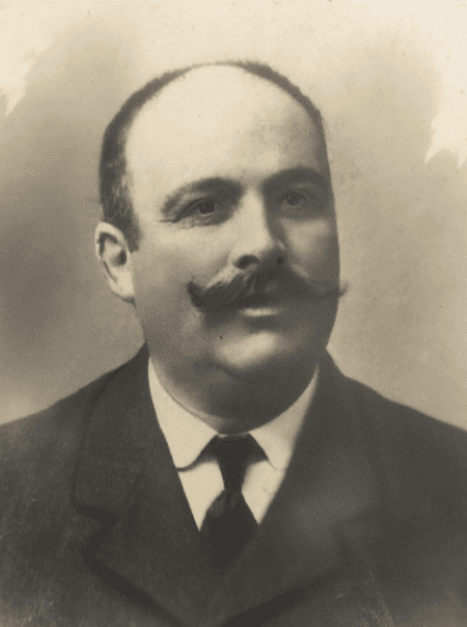
José Domingos Moreira
Born: 09.10.1860Died: 22.09.1936
2nd generation · Continuer of Casa Moreira
In brief
After the founder’s death, his eldest son José Domingos Moreira received the family home, the properties, the Casa de Armação, and the link to the Band. His task was continuity: keeping alive a house already recognised, with order and sobriety, at a time when furnishing, farming, candles, flowers, music, and parish life shared the same roof. A reserved man, he led with prestige and held firm the work he had inherited. Beside him, Albina da Silva Aroso, from Freixieiro, oversaw domestic, agricultural, and ceremony-support work. From this household came António José Moreira, who would become “Mestre Clara”, and Carlos José Moreira, future colonel and mayor of Maia. José Domingos Moreira died on 22 September 1936, aged 75, leaving an organised house for the period of greatest prestige in its history. Leadership of the Armação and the Band passed to his son in 1914.
With the death of Domingos José Moreira, continuity of the Casa was ensured by his son José Domingos Moreira, who preserved and consolidated the work begun by the founder.
As the eldest son, and according to the family customs of the time, José Domingos Moreira inherited the family home, agricultural properties, the Casa de Armação, and the link to the Banda de Música. He received not only material patrimony, but also a family, professional, and community responsibility.
If Domingos José Moreira was the man of foundation, José Domingos Moreira was the man of continuity. His mission was to keep alive a house already recognised in Moreira da Maia, ensuring stability of activity, internal order, and the bond between family, Armação, farming, and Band.
Casa Moreira was then more than a service house. It was a broad family structure where furnishing work, agricultural life, production of ceremonial elements, music, and participation in the religious and social life of the parish coexisted. Continuity therefore required organisation, sobriety, and a sense of responsibility.
According to family memory, José Domingos Moreira was a good man, reserved, perhaps shy and without great public ambition, but he ran everything with order and prestige. That description reveals a personality different from the founder’s: less entrepreneurial and expansive, but essential to ensure that the inherited work was not lost.
In the history of the Banda de Música de Moreira da Maia his name is also associated with the early years of the group’s affirmation, cited as one of its great promoters in the initial phase of its life. This link reinforces continuity between the Casa de Armação and the Band — two institutions born united by the same family and the same vision of dignifying religious, festive, and funeral ceremonies.
He was married to Albina da Silva Aroso, from Freixieiro, Perafita, Matosinhos — a woman remembered by the family as a figure of great worth, much admired by her children and esteemed for her dedication to others. Her presence was also decisive in the life of the Casa, presiding over domestic, agricultural, and Armação-support work.
In an era when Casa Moreira functioned as a true family workplace, Albina da Silva Aroso took part in many tasks: from farming to preparing flowers, from making wax candles to supporting work linked to ceremonies. Continuity of the Casa was thus achieved not only through formal male leadership, but also through the quiet, indispensable work of the women of the family.
From the marriage of José Domingos Moreira and Albina da Silva Aroso several children were born, among them António José Moreira, who would become known as “Mestre Clara”, and Carlos José Moreira, the future Colonel Carlos Moreira. Through this descent, the second generation prepared the way for two figures who would deeply mark family, institutional, and local history.
José Domingos Moreira died on 22 September 1936, aged 75. His life represents a stage of consolidation: the passage from the founder’s work to an organised, respected family house, ready to reach, in the next generation, one of the periods of greatest prestige in its history.
1914 — 1957
Prestige
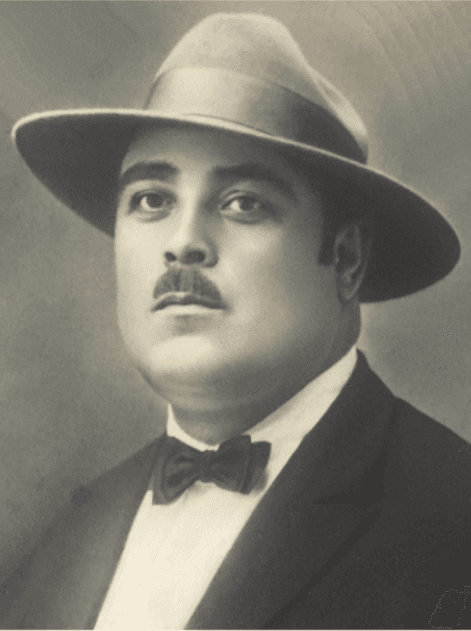
António José Moreira, “Mestre Clara”
Born: 1892Died: 31.10.1957
3rd generation · Master of Distinction
In brief
Around mid-1914, António José Moreira, the founder’s grandson, took over the Casa de Armação and the conduct of the Banda de Música de Moreira da Maia, and became known forever as “Mestre Clara”. This is the generation of prestige: skill as an armador, social presence, and recognition extending across many surrounding parishes, where families, farmers, and priests sought him to give dignity to solemn moments. He built the large warehouse facing the family home, gave the Band premises a few metres away, and expanded family property, making the headquarters a place of craft, music, farming, and relationships. Married to Tercília Silva, he left no direct descendants. He died on 31 October 1957, aged 65. At his funeral the grandfather’s monumental bier was used for the last time. The epithet lives on in Rua Mestre Clara, the neighbouring development, and in how the Casa is still called today: the Casa do Mestre Clara.
At the beginning of the twentieth century, around mid-1914, António José Moreira, grandson of the founder Domingos José Moreira, took leadership of the Casa de Armação and the regency of the Banda de Música de Moreira da Maia. He would forever be known as “Mestre Clara”.
His figure represents one of the most striking periods in the history of Casa Moreira. If his grandfather was the founder and his father the continuer, António José Moreira was the one who gave the Casa a dimension of prestige, public presence, and regional recognition that would cross generations.
He succeeded Casa Moreira and the Armação, and was also Master of the Banda dos Bombeiros Voluntários de Moreira da Maia, an institution deeply linked to the family since its foundation. In him, as in few others, came together the two original dimensions of Casa Moreira: the art of armação and music. For António José Moreira, ceremony was not merely a service; it was an expression of order, solemnity, distinction, and respect.
Endowed with great skill in the armador’s trade, a engaging personality, and strong social presence, he became a known and respected figure for many kilometres around. His ability to relate, care for presentation, and mastery of the social conventions of his time gave the Casa de Armação rare renown. Families, farmers, priests, and influential figures from neighbouring parishes sought him, recognising in him not only a service provider but someone able to advise, organise, and confer dignity on the most solemn moments.
In his time, the Casa de Armação was particularly progressive. One of the most important signs of that evolution was the construction of a large warehouse for Casa Moreira’s activity, facing the family home. That space allowed the old Casa de Armação to gain new scale and organisation, bringing together materials, structures, equipment, and decorative elements essential to preparing ceremonies.
The Banda de Música also benefited directly from his action. António José Moreira provided it with new premises on the same street, a few metres from the Casa de Armação. Those premises would serve as headquarters and rehearsal space for many decades, reinforcing the physical and symbolic closeness between Casa Moreira and the Banda de Moreira da Maia.
His work was not limited to managing what he had received. António José Moreira expanded, consolidated, and improved family property. He acquired land, reorganised spaces, and turned the family home into a centre of activity, representation, and hospitality. Casa Moreira became, in that period, a house of work but also of social presence: a place of craft, music, farming, ceremony, relationships, and memory.
His action reveals a very fine understanding of the symbolic importance of ceremonies. In religious feasts, public celebrations, and funeral ceremonies, the Casa de Armação had the responsibility to create atmosphere, solemnity, and distinction. It had to transform churches, spaces, and processions into moments visually dignified and socially recognisable. In that world, António José Moreira stood out as master of the craft and of representation.
In funeral ceremonies in particular, his Casa continued a tradition begun by the founder: giving mourning a public expression of respect. The old monumental gilded funeral bier designed by his grandfather would be used for the last time at his own funeral in 1957. That fact holds powerful symbolism: the greatest piece of the old Casa de Armação accompanied, one last time, the man who had most deeply raised its prestige.
Known for a tall, strong build and singular warmth, António José Moreira left a memory that went beyond family life. His name became tied to the identity of the place itself. The municipality of Maia would perpetuate his epithet by naming “Rua Mestre Clara” the street where he was born, where the historic headquarters of Casa Moreira stands, and where the premises of the Banda de Música de Moreira da Maia are also found.
That tribute was not merely toponymic. It was public recognition of a figure who marked local life through his work, influence, and deep bond between Casa Moreira, the Band, and the community. The persistence of the name “Mestre Clara” on the street, in the neighbouring development, and in popular memory shows that António José Moreira became more than a manager of the Casa: he became a reference for the parish of Moreira da Maia itself.
Still today, Casa Moreira is also known as the “Casa do Mestre Clara”. That popular name sums up the weight of his memory. Few family figures manage to give their name to a house, a street, and part of local identity. António José Moreira did so because his life united competence, presence, work, and distinction.
He was married to Tercília Silva, from Vizela — a welcoming, affectionate figure who would ensure continuity of Casa Moreira after his death. Having left no direct descendants, the end of his life also marked the closing of one of the most prestigious chapters in the Casa’s history. Even so, the strength of what he built was enough to sustain the institution’s continuity in the years that followed.
António José Moreira died on 31 October 1957, aged 65. His death was deeply felt by the family and by all who held relations of friendship, admiration, and respect with him.
In the history of Casa Moreira, “Mestre Clara” remains the figure of distinction. He was the man who gave scale to the Casa de Armação, consolidated the link to the Banda de Música, strengthened the family’s social presence, and left a mark so deep that the place itself preserved his name.
António José Moreira, “Mestre Clara”, belongs not only to the genealogy of the Moreira family. He belongs to the memory of Moreira da Maia.
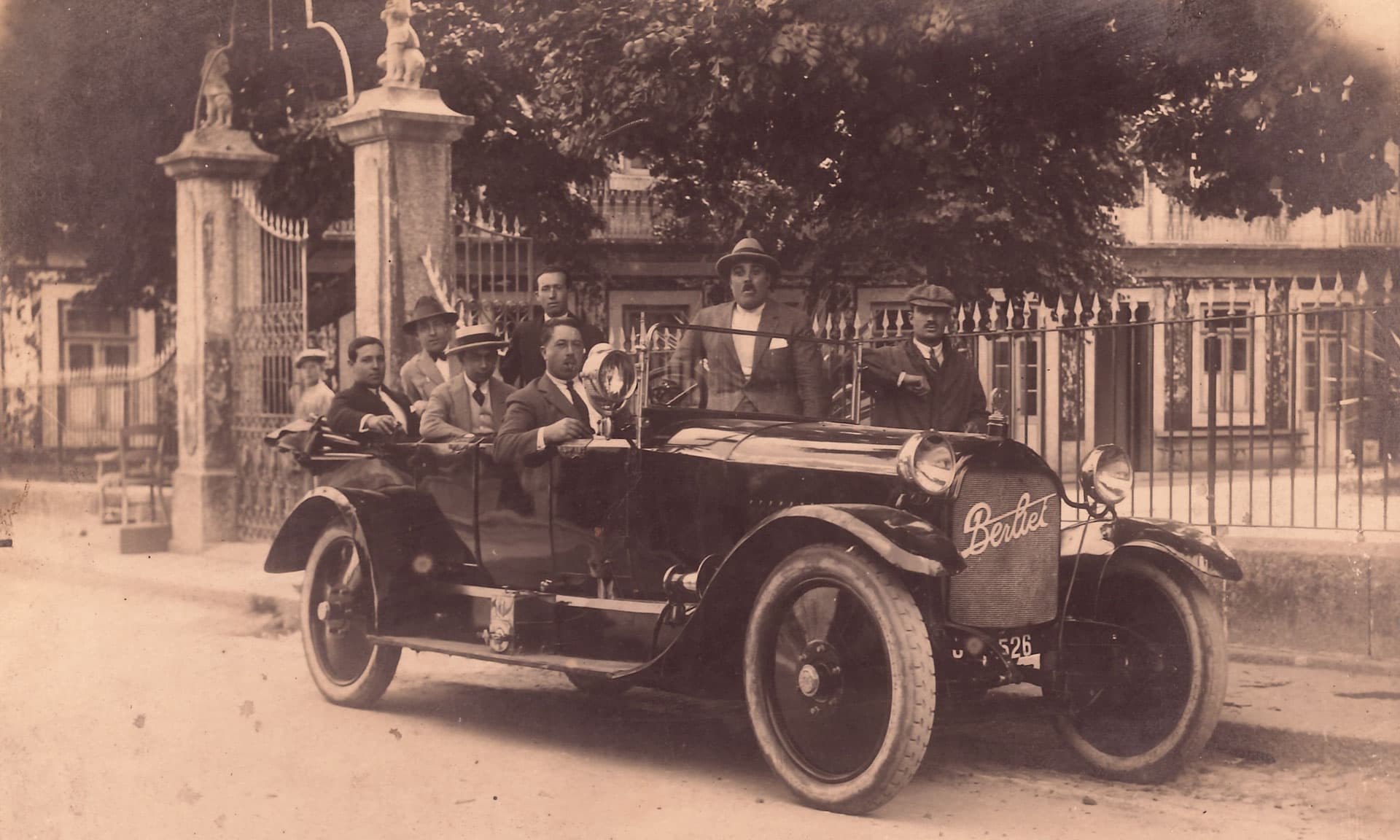
30.08.1923 — Vizela cemetery 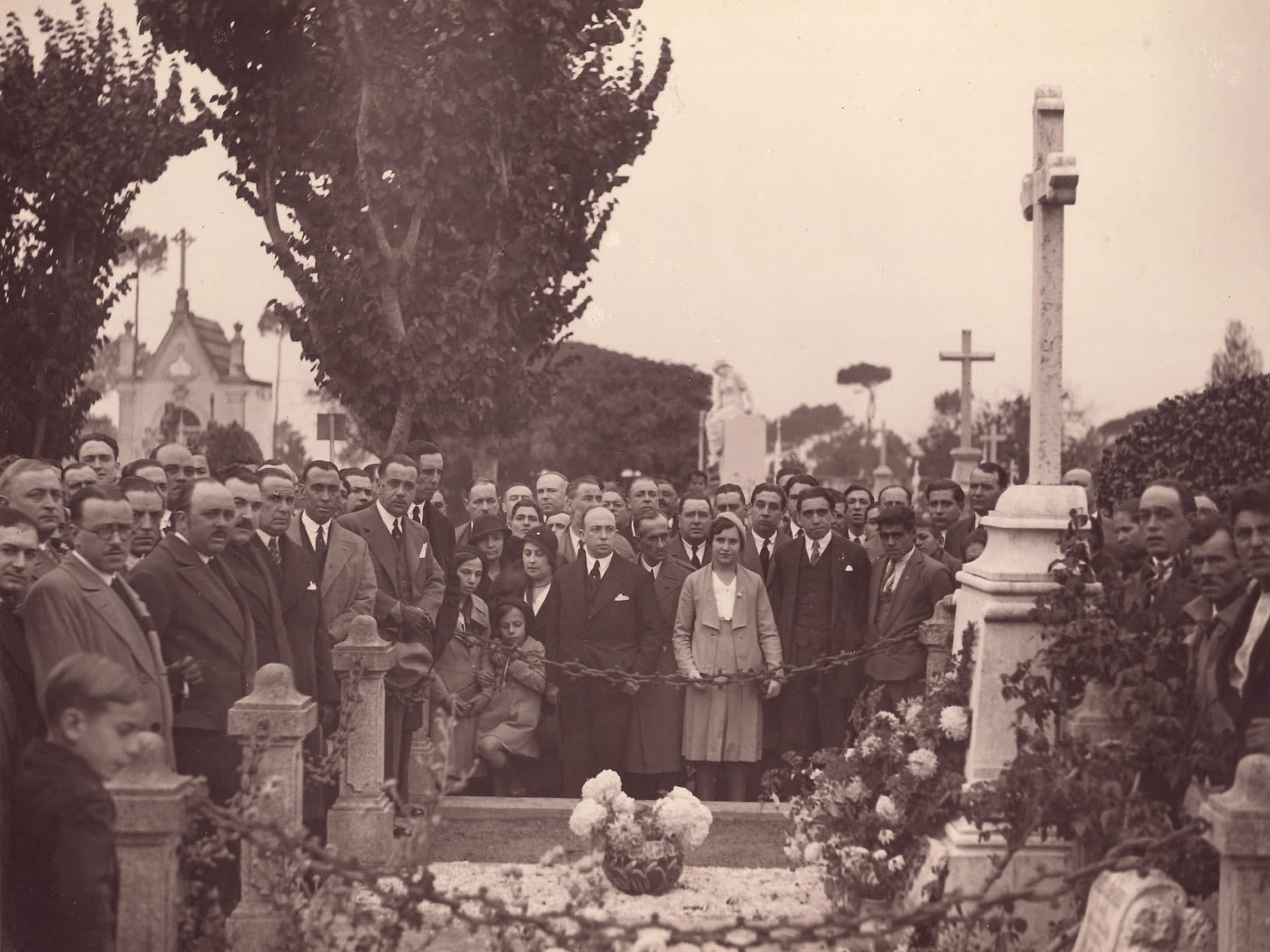
1930–1950 — Funeral 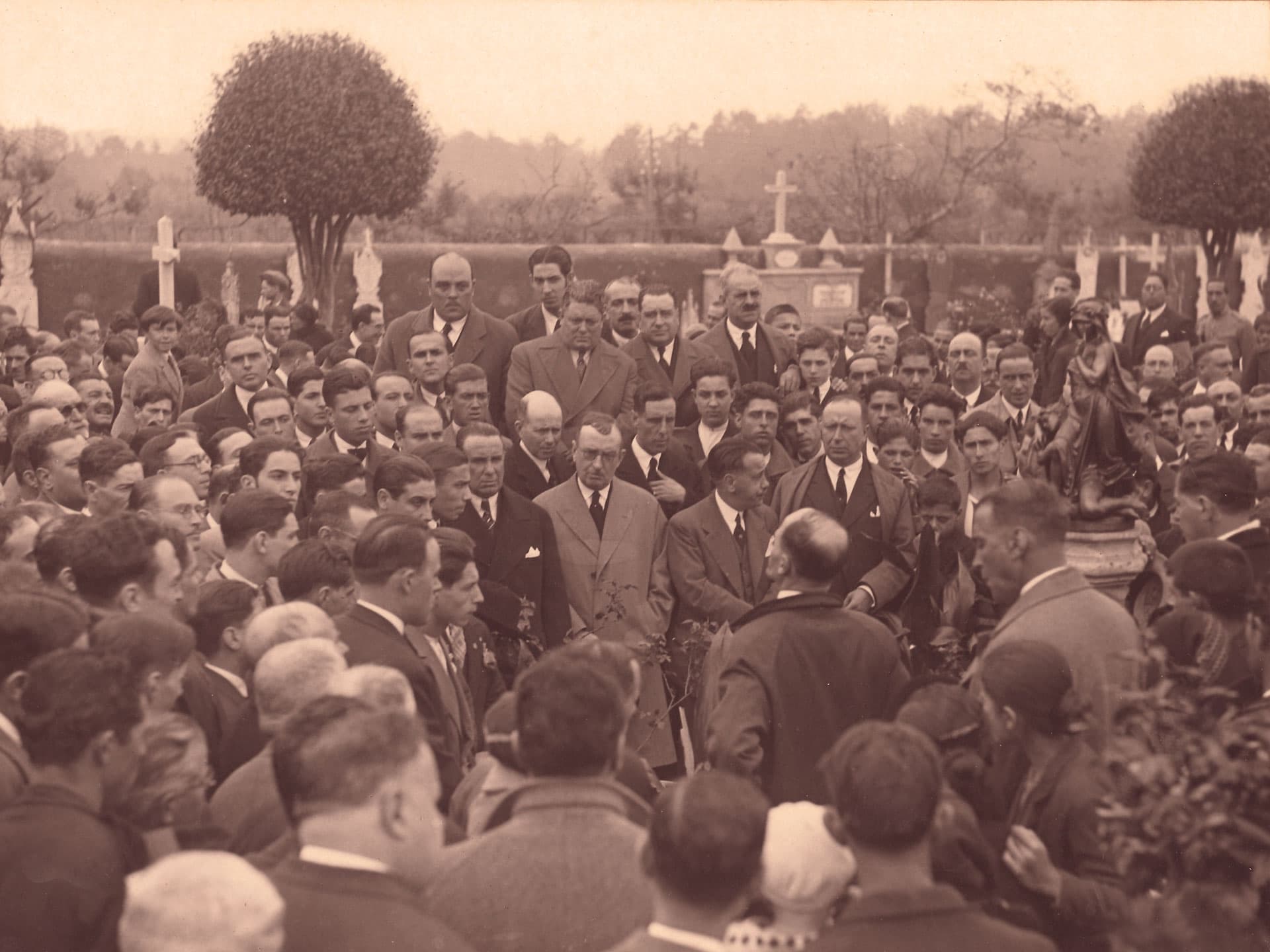
1930–1950 — Procession 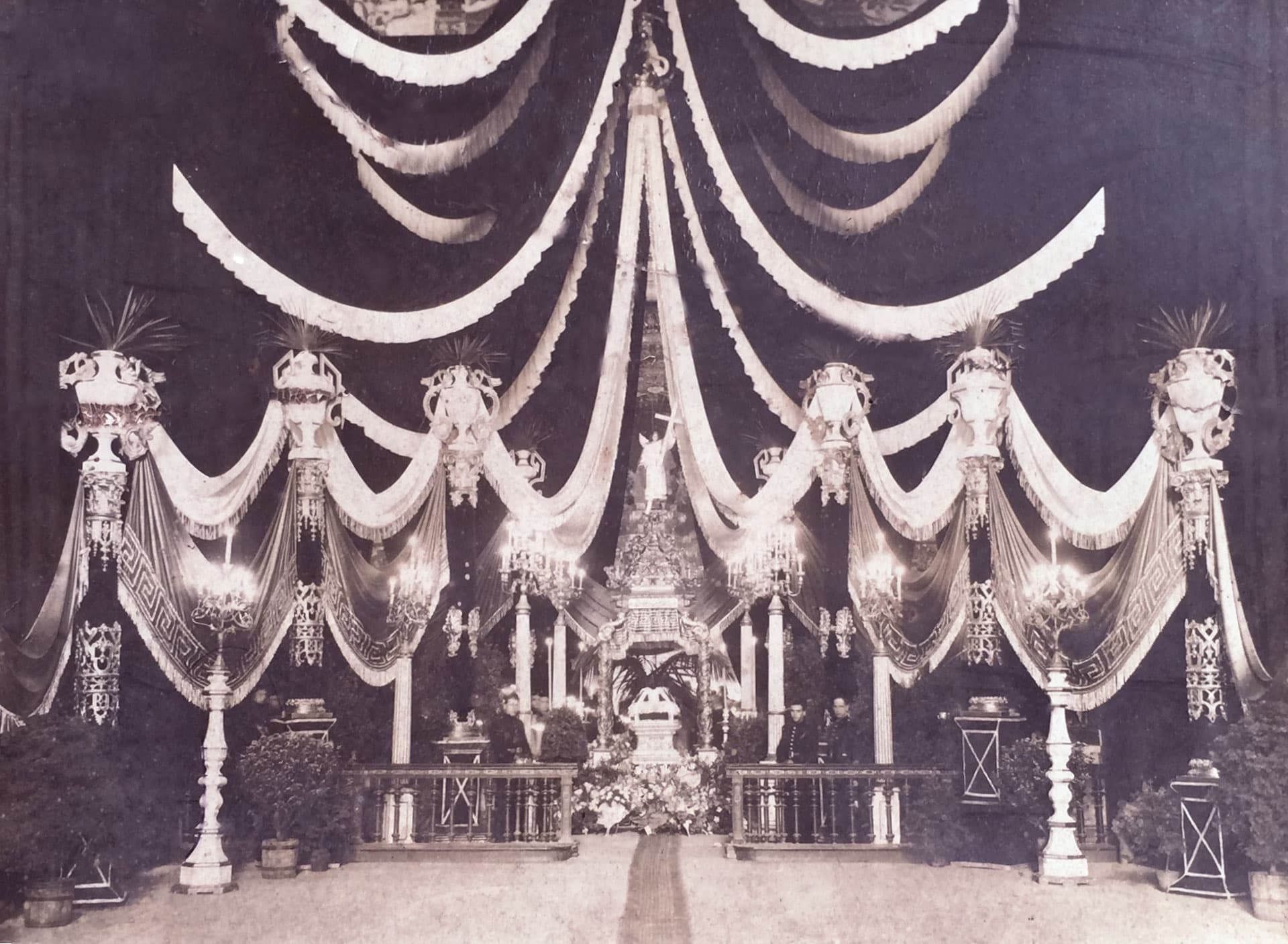
Church decoration — monumental bier 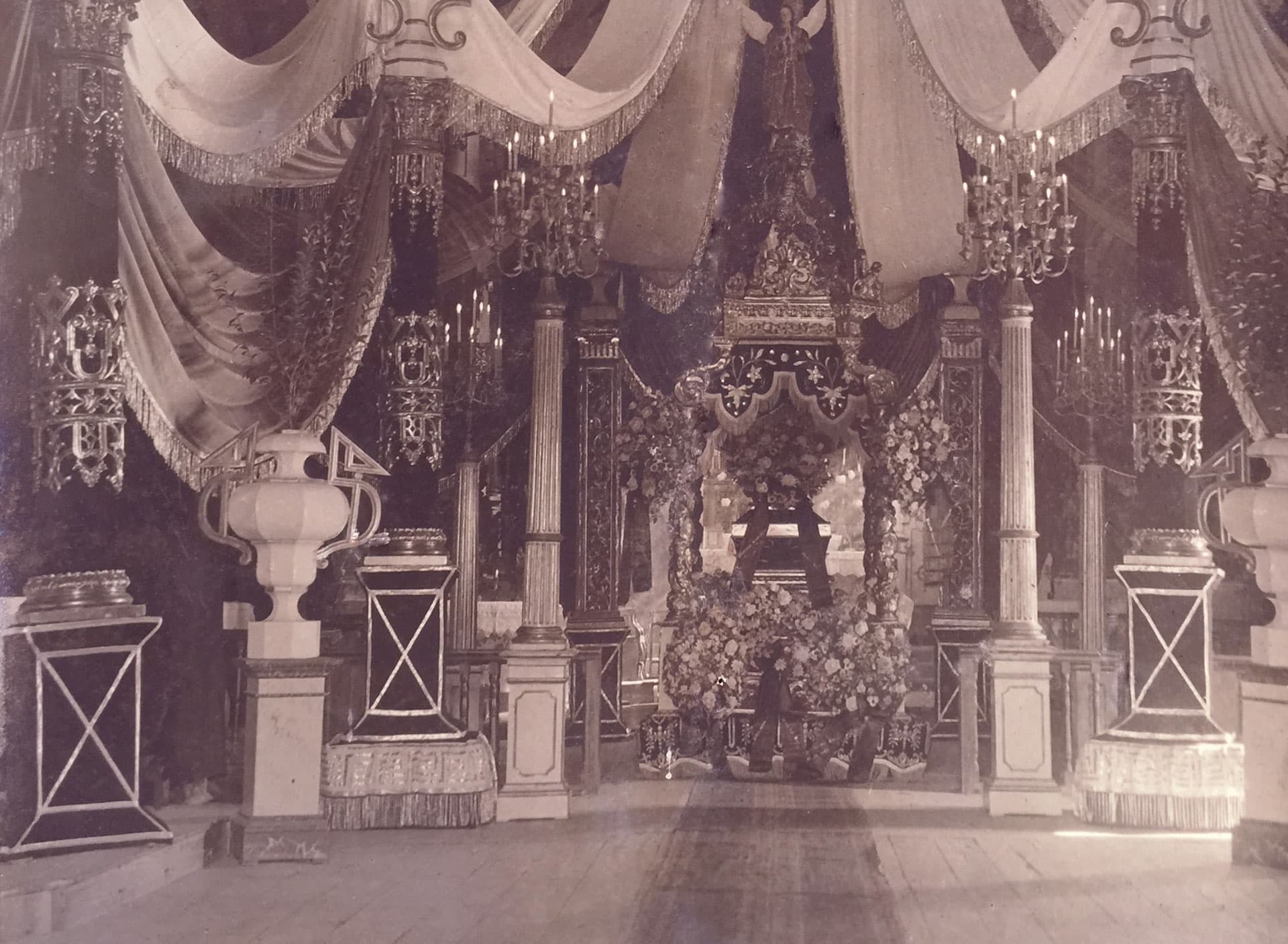
Church decoration — monumental bier
1957 — 1975
A New Era
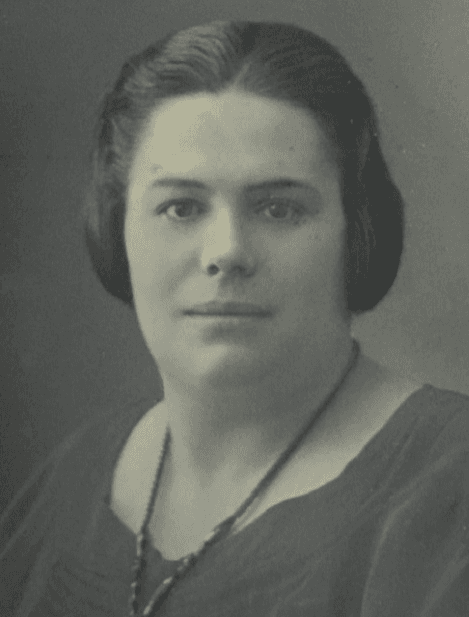
Tercília Silva
Born: 1895Died: 14.03.1975
Guardian of the Legacy
In brief
When “Mestre Clara” died without direct descendants, the Casa passed in 1957 to Tercília Silva, “Titã”, from Vizela, with the help of sisters-in-law Almerinda Moreira and Conceição Moreira. For eighteen years, until 14 March 1975, three women preserved the activity, hospitality, and dignity of a house accustomed to receiving well, at a moment when management was no longer in a direct descendant of the founder. The Band continued under Professor Manuel Moreira da Silva. The family of Colonel Carlos José Moreira, the “Mestre Clara’s” brother and mayor of Maia, and Maria Eulália Balacó remained intimately linked to Moreira; it was Maria Eulália who wrote the family memoir from which we today read the Moreiras’ origin and continuity. In 1969, RTP recorded the posthumous tribute to “Mestre Clara”, with the unveiling of Rua Mestre Clara, and the inauguration of the Casa-Museu Carlos José Moreira.
With the death of António José Moreira, “Mestre Clara”, in 1957, one of the most striking and prestigious chapters in the history of Casa Moreira closed.
Without direct descendants, continuity of the Casa was ensured by Tercília Silva, his wife, with the close help of his sisters Almerinda Moreira and Conceição Moreira.
Known in the family as “Titã”, Tercília Silva was from Vizela and came from a family linked to the Grande Hotel Universal de Vizela, a reference establishment in a spa town that, in the early twentieth century, was a place of rest, sociability, and distinction. That origin helps explain an important part of her personality: a sense of hospitality, the art of receiving, and the natural way she maintained the dignity of a house used to welcoming people well.
The Casa Moreira that Tercília Silva took on was not merely a business. It was the Casa do “Mestre Clara”, the Casa da Armação, the Casa linked to the Banda de Música, to religious ceremonies, to local families, and to the identity of Moreira da Maia itself. She inherited not only an activity, but a heavy memory, a respected name, and a responsibility hard to imagine.
Thus began a new era, in which the fate of Casa Moreira was no longer led by a direct descendant of its founder — and it is also notable that this was a period in which the Casa was run with a distinctly female leadership.
That female continuity was not a minor note. On the contrary, it was a decisive phase of preservation. Tercília Silva, Almerinda Moreira, and Conceição Moreira did not seek to enlarge the Casa as “Mestre Clara” had before them; their task was rather to protect what existed, preserve habits, maintain relationships, ensure whatever activity was possible, and prevent the legacy they had received from fading.
Casa Moreira continued in this period to be a house of work, but also a family home. Habits of hospitality, conviviality, and family presence were kept. Weekends and holidays still brought close relatives to Moreira, among them the family of Colonel Carlos José Moreira and Maria Eulália Balacó, with their sons José Carlos, Rui Alfredo, and Nuno, who for years had a very close relationship with the Casa, the aunts, and the family atmosphere of Moreira.
The presence of the Balacó-Moreira family is essential to understanding this phase. Casa Moreira was not only a place of passage or work: it was also a place of belonging, where several generations grew up, spent time together, and kept memory. For the children of Carlos José Moreira and Maria Eulália Balacó, Moreira was a childhood home, weekends, holidays, family ties, and deep affection.
Almerinda Moreira, “Mina”, and Conceição Moreira also played a discreet but fundamental role. Almerinda devoted herself to domestic life, raising poultry, and caring for the house; Conceição tended the vegetable gardens, plants, flowers, and fruit. Together with Tercília Silva, they were quiet but indispensable figures in maintaining the great Casa de Moreira — its daily life, dignity, and family atmosphere.
The conduct of the Banda de Música was already in the hands of Professor Manuel Moreira da Silva, who for many years ensured the musical direction of the institution. Thus, while the Band pursued its path in a new phase, Casa Moreira, through Tercília Silva, maintained the institutional and family continuity of the old Casa de Armação.
Supported by the prestige achieved by “Mestre Clara”, Casa Moreira kept its operations and was run competently for 18 years, until the death of Tercília Silva, aged 79, on 14 March 1975.
Colonel Carlos José Moreira, the “Mestre Clara’s” brother and President of Maia Municipal Council, was also closely linked to Casa Moreira in this period. A figure of great civic and institutional importance, he received many tributes, expressions of esteem, and decorations, and died on 14 February 1979, aged 82.
A distinguished soldier, former commander of the Bombeiros Voluntários de Moreira da Maia and a mayor deeply tied to his land, Carlos José Moreira marked the history of the municipality of Maia. His public action went beyond the family sphere, but never ceased to be linked to Moreira, the Casa, and the memory of the “Claras”.
His name is perpetuated in a street in Moreira and in the market at Castêlo da Maia, in Santa Maria de Avioso. His wife Maria Eulália Balacó, Rector of Liceu Carolina Michaëlis, also has her name on a street crossing Rua Mestre Clara — a sign of the public and cultural importance of this family bond.
Maria Eulália Balacó holds a very special place in this history for another reason: near the end of her life, she wrote the family memoir that today allows us to understand, with rare richness, the origin, continuity, and ties of the Moreira family. Her manuscript is not merely a private record; it is a fundamental piece for preserving the memory of Casa Moreira.
Her writing preserves names, relationships, episodes, work, habits, tensions, affection, and details that would hardly have survived by oral tradition alone. The history of Casa Moreira must therefore also recognise Maria Eulália Balacó as guardian of family memory.
In 1969, posthumous tribute ceremonies were held for António José Moreira, “Mestre Clara”, with the unveiling of the street sign “Rua Mestre Clara”, thus giving his epithet to the street of Casa Moreira and, later, to the Urbanização Mestre Clara.
On the same day there was also the inauguration ceremony of the Casa-Museu Carlos José Moreira, “Casa Museu da Terra da Maia”, and a tribute to Carlos José Moreira, outgoing President of Maia Municipal Council.
These ceremonies were recorded by RTP — Rádio Televisão Portuguesa — and are preserved in RTP’s archives.
 RTP ArquivosInauguration of the Casa-Museu Carlos José MoreiraVer o registo nos arquivos da RTP
In the images it is possible to identify Tercília Silva, then manager of Casa Moreira, Colonel Carlos José Moreira and his sons José, Rui, and Nuno — a rare and valuable audiovisual memory of this period.
This phase of the history of Casa Moreira is therefore richer than a simple transition. It was a time of preservation, memory, and family continuity. It was the time when three women held the Casa after the disappearance of “Mestre Clara”; when the Balacó-Moreira family remained deeply linked to Moreira; when the name Mestre Clara passed from family memory to public toponymy; and when Casa Moreira remained alive, dignified, and recognised until the move to a new stage.
In the history of Casa Moreira, Tercília Silva remains the Guardian of Casa Moreira: the woman who received an enormous legacy — of prestige, ceremony, music, family, and responsibility — and kept it alive in one of the most delicate periods of its history.
1975 — 1982
Relocation
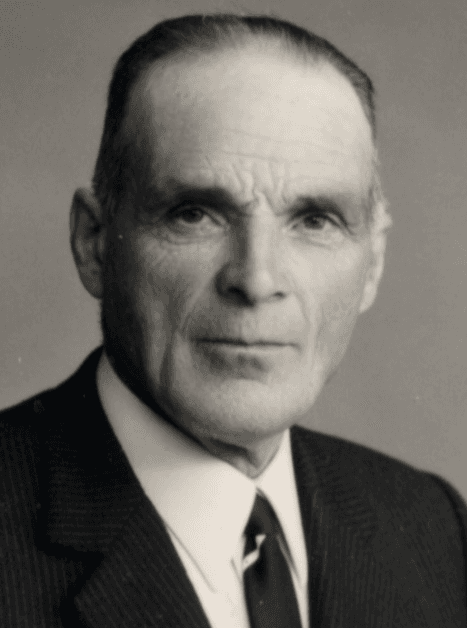
Domingos José Moreira
Born: 15.06.1902Died: 05.10.1998
3rd generation · Rooting Casa Moreira in Lavra
In brief
In 1975, after Tercília Silva, leadership returned to a direct descendant of the founder: Domingos José Moreira, the founder’s grandson and younger brother of “Mestre Clara” and Colonel Carlos José Moreira. Born in the Casa on 15 June 1902, he soon moved to Cabanelas, Lavra, where he was Justice of the Peace, parish council secretary from 1937 to 1942, and parish council president from 1942 to 1962. The Moreira name took root in that territory — in the Casa de Cabanelas and in the Capela das Almas, known as Capela do Moreira — and the funeral business gained recognition in Lavra and Matosinhos, while new firms led traditional activity to decline. He remained in Lavra. From the start of his management he relied on his son Domingos José Dias Moreira, born in Lavra, who returned to Moreira da Maia and prepared the Casa’s rebuilding. The death of Carolina Alves Azevedo Dias on 8 November 1982 marked the definitive handover to that son. Domingos José Moreira died on 5 October 1998, aged 96; Matosinhos named a street after him in Lavra.
After the death of Tercília Silva in 1975, direction of Casa Moreira was again taken on by a direct descendant of its founder: Domingos José Moreira, grandson of Domingos José Moreira, “o Clara”, and younger brother of António José Moreira, “Mestre Clara”, and Colonel Carlos José Moreira.
Although born in Casa Moreira, in Moreira da Maia, on 15 June 1902, he soon moved to live and start a family in Cabanelas, parish of Lavra, municipality of Matosinhos. His life would thus be marked by a double belonging: family origin in Moreira da Maia and personal, family, and social rooting in Lavra.
It was in Lavra that he built much of his public path. There he was recognised for his merit as Justice of the Peace, parish council Secretary from 1937 to 1942, and President of Lavra parish council from 1942 to 1962. For about two decades he was thus tied to the municipal and community life of the parish that welcomed him in adulthood.
This link to Lavra was not only institutional. It was also family, property, and territorial. Domingos José Moreira became deeply associated with the Casa de Cabanelas and rural life in that place, at a time when family authority, property, farming, the parish council, and social presence crossed naturally in community life.
The Casa de Cabanelas represents, in this phase, an essential point in the history. There the Lavra branch of the family consolidated and the Moreira family’s presence outside the original core of Moreira da Maia was strengthened. This move did not mean a break with origin; it meant creating a new zone of influence where the Moreira name gained recognition of its own.
The Capela das Almas de Cabanelas, known as Capela do Moreira, also gives material expression to that link. Attached to the Casa do Milheiro in Cabanelas, this chapel is an important element of local and family memory. Though private property, it maintained a link to the community and could be used for funeral occasions or with permission. The presence of this chapel reinforces the relationship between the Moreira family, local religiosity, community life, and farewell rituals.
It was around this time that Funerária Casa Moreira is thought to have gained greater recognition around Lavra parish and the municipality of Matosinhos. The Casa’s influence was no longer centred only on Moreira da Maia and also extended to Cabanelas, Lavra, and nearby parishes, following Domingos José Moreira’s social and institutional presence in the region.
At the same time, this period was also marked by difficulties. With the appearance and growth of new funeral homes in Matosinhos and neighbouring municipalities, there was a gradual decline in the company’s traditional activity. Casa Moreira still had name, history, and respect, but it already faced a context different from that in which “Mestre Clara” had enlarged it.
Domingos José Moreira remained faithful to Lavra parish, where he started his family and lived his adult life, not returning permanently to Casa Moreira in Moreira da Maia. For that reason, from the start of his management in 1975, he relied on the support of his son Domingos José Dias Moreira, who would take the inverse path of his father: born in Lavra, he came to live and start a family in Casa Moreira in Moreira da Maia.
That support from his son was decisive. After completing compulsory military service, Domingos José Dias Moreira progressively assumed responsibility for Casa de Armação operations and for rebuilding the old Casa Moreira. While the father remained linked to Lavra and Cabanelas, the son returned to the original core of Moreira da Maia, preparing the next phase of family history.
Domingos José Moreira was married to Carolina Alves Azevedo Dias, from Lavra, Angeiras — a woman remembered by the family as deeply dedicated, hardworking, and patient. Her presence was decisive in the life of the house, not only in family terms but also through constant support for farming, domestic organisation, and care for her husband and children.
The couple had a large family, among whom Domingos José Dias Moreira stood out as the one who would definitively take on the fate of Casa Moreira. The handover was not only business-related: it was family, territorial, and symbolic. Casa Moreira, born in Moreira da Maia, had extended to Lavra, then returned, through the next generation, to its original home.
The unexpected death of Carolina Dias on 8 November 1982 is thought to have brought the definitive transfer of Casa Moreira’s fate to her successor and son, Domingos José Dias Moreira. That moment marks the end of the relocation phase and the start of a new stage in which the Casa would again be centred on Moreira da Maia and progressively rebuilt.
Domingos José Moreira died on 5 October 1998, aged 96. The municipality of Matosinhos would perpetuate his memory by naming a street after him in Lavra parish.
In the history of Casa Moreira, Domingos José Moreira represents the phase of rooting in Lavra. He was not the founder, nor the great master of distinction, nor the rebuilders of the following phase. He was the figure who carried family memory to another territory, gave the Moreira name presence in Cabanelas and Lavra, and, through his son, prepared Casa Moreira’s return to its place of origin.
1982 — 2017
Rebirth
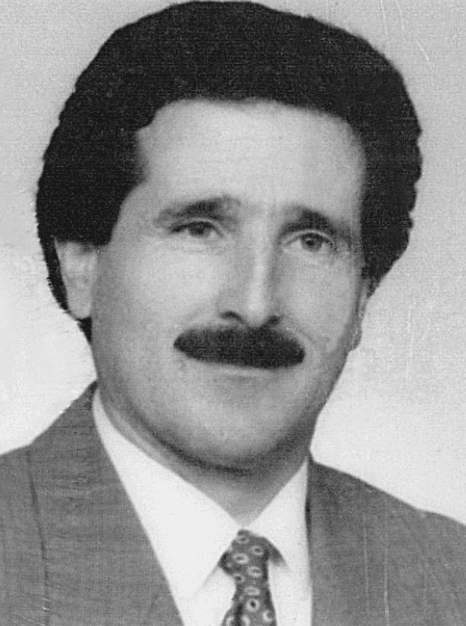
Domingos José Dias Moreira
Born: 12.11.1951Died: 24.04.2017
4th generation · Heir to the Spirit of the “Claras”
In brief
Domingos José Dias Moreira, born in Lavra on 12 November 1951, is the one who brings the Casa back to life. He arrives at a weakened Armação, takes conduct of the Band in 1977 — renewing the old link between Casa and music — and, after his mother’s death in 1982, definitive management. He reverses decline, opens premises in Gueifães and Nogueira, and becomes present in Moreira, Gueifães, Nogueira, and Lavra. In his time the old Casa de Armação takes its current name, Agência Funerária Secular Casa Moreira, Lda., and the Band becomes an association in 1982, with a music school, a record in 1993, and the path toward its own headquarters. Beside him is Aurora Fernanda Moreira. The twin sons João Filipe and Luís José Machado Moreira grow up in the Casa. He dies on 24 April 2017, aged 65 — the same age at which “Mestre Clara” had died. He was the last to unite, in one life, the Casa, the Band, and rebuilding the company.
With Domingos José Dias Moreira, Casa Moreira enters one of the most decisive moments in its recent history.
Son of Domingos José Moreira and, in family line, grandson of the generation of the “Claras”, he was born in Lavra, Matosinhos, on 12 November 1951. Yet his destiny would be deeply tied to Casa Moreira in Moreira da Maia, where he soon came to live, start a family, and assume responsibility for an old, weighty, demanding inheritance.
His arrival at Casa Moreira did not come in an easy period. After the death of “Mestre Clara” in 1957 and the continuity ensured by Tercília Silva, Almerinda Moreira, and Conceição Moreira, the old Casa de Armação was weakened. It kept name, memory, and prestige, but no longer had the operational, family, and social strength of its most striking times.
It is in this context that Domingos José Dias Moreira assumes a truly transformative role.
Even before taking definitive management of the Casa, he assumed conduct of the Banda de Música de Moreira da Maia in 1977. That link to the Band was not a side detail: it was the return of an old tradition, begun by the founder Domingos José Moreira and raised by the celebrated António José Moreira, “Mestre Clara”. Domingos José Dias Moreira was not formally “Mestre Clara”; that place belongs to the history of António José Moreira. But through his dual link to the Casa de Armação and the Band, he was the last great heir of that spirit.
In his person the two institutions born from the same family root met again: Casa Moreira and the Banda de Música de Moreira da Maia. His role therefore goes beyond managing a company. He represents reunion with a secular tradition in which ceremony, music, community, and family crossed in a single identity.
After the death of his mother, Carolina Dias, in 1982, Domingos José Dias Moreira assumed definitive management of Casa de Armação Moreira. It was the moment to decide whether the Casa would continue to fade as a respected but increasingly distant memory, or would again occupy a strong place in the present. His answer was clear: rebuild, reorganise, and expand.
Like his most striking predecessors, he did not merely conserve what he had received. He brought the Casa back to life. He reversed the downward trend of activity, restored presence, ambition, and operational capacity, and turned an old Casa de Armação into a modern funeral home while keeping alive the link to its independent origins.
Regarding the Casa de Armação, he was responsible for significant expansion. He gave the company new premises in the parishes of Gueifães and Nogueira, in the municipality of Maia, extending Casa Moreira’s presence beyond the historic core of Moreira da Maia and the family link to Lavra, Matosinhos. The Casa thus became actively present in four places: Moreira, Gueifães, Nogueira, and Lavra.
Opening and consolidating presence in Gueifães was particularly important. The former “Funerária de Gueifães”, associated with Secular Casa Moreira, allowed the company to gain new centrality in a populous nearby parish, strengthening its ability to respond to families and widening its natural area of influence. With this expansion, Casa Moreira ceased to be only a historic reference of Moreira da Maia and assumed a broader presence in the municipality.
In Nogueira too, Casa Moreira’s presence corresponded to a clear reading of the territory and families’ needs. Domingos José Dias Moreira understood that the Casa’s continuity could not depend only on inherited prestige. It was necessary to be close to people, create structures, strengthen resources, and prepare the company for a new social, urban, and competitive reality.
It was also during his management that the old Casa de Armação took its current designation: “Agência Funerária Secular Casa Moreira, Lda.” This change was not merely formal. It represented the passage from an old tradition linked to armação, music, and ceremonial ornamentation to a contemporary business structure oriented toward full funeral services, without erasing its historical origin.
Operational growth of Casa Moreira during his management was gradual, sustained, and deeply tied to his way of being. Activity expanded, services became more complete, resources increased, and the company reached levels of presence and recognition that had not occurred before in its recent history. But that evolution was not only through business strategy: it was also through human values.
Domingos José Dias Moreira was remembered for his warmth, dedication to work, and the way he treated families. In a sector where trust is essential, he understood that a funeral home lives not only on logistics, vehicles, premises, or organisation. Above all, it lives on how it supports people when they most need calm, respect and care.
His business work was thus inseparable from his human dimension. Casa Moreira grew because it knew how to keep, in contact with families, a way of being marked by availability, discretion, responsibility, and sense of mission. Funeral service progressively ceased to be only continuation of the old armação and became an integral, close, professional response to the needs of bereaved families.
In parallel, his link to the Banda de Música de Moreira da Maia also marked a decisive stage. During his conduct, in 1982, the Banda de Música became an Association, taking the name “Associação da Banda de Música de Moreira da Maia”. This step allowed the institution to be autonomised and structured, giving it conditions to cross a new phase of its life.
The Band, deeply linked to the Moreira family since its foundation, then gained its own associative base. That transformation allowed consolidation of the music school, energising musical activity and preparing the institution for challenges that could no longer depend only on the old family structure. The emotional and historical link to Casa Moreira remained, but the Band gained tools for its own path.
This phase is also credited with an important qualitative affirmation of the Band, including recording a CD in 1993, consolidating the music school, and laying foundations for the institution later to have more dignified premises of its own. Decades later, in 2020, the inauguration of the new Casa da Música de Moreira would symbolically fulfil that ambition to give the Band a headquarters worthy of its history and prestige.
In family terms too, Aurora Fernanda Moreira stood beside him — a figure of great firmness, culture, and musical sensitivity. Trained in singing and piano at the Conservatório do Porto, where she distinguished herself, she was a lyric soprano, had television presence, and also took part in founding the Academia de Música de Viana do Castelo. Her link to music brought a natural continuity of a dimension deeply present in the Moreiras’ history.
In the life of the Casa and the family, Aurora Fernanda Moreira also played a discreet but essential role: that of a firm, lucid, protective presence. Beside Domingos José Dias Moreira, she helped give balance, stability, and practical sense to a demanding phase of family and Casa Moreira life. The strength of her presence was a silent but decisive part of the Casa’s rebirth.
In this path, Domingos José Dias Moreira appears as a hinge figure. He received an old Casa, linked to the memory of the “Claras”, at a moment of fragility. He brought it close again to its origin. He rebuilt funeral activity. Expanded it to new parishes. Formalised its modern identity. And, at the same time, gave continuity to the musical link that had always been part of the family’s soul.
His work can therefore be seen, like that of the founder Domingos José Moreira and his uncle António José Moreira, “Mestre Clara”, as one of the most striking in the history of Casa Moreira. The founder created. “Mestre Clara” enlarged. Domingos José Dias Moreira rebuilt.
He was perhaps the last to represent, in a single life, the old unity between Casa de Armação and Banda de Música. Not by title or formal epithet, but by concrete action: he conducted the Band, ran the Casa, lived in the historic headquarters, rebuilt activity, and projected the company toward the future.
His personal life was also deeply tied to Casa Moreira. Married to Aurora Fernanda Moreira, he started his family in Casa Moreira itself. His twin sons João Filipe Machado Moreira and Luís José Machado Moreira grew up in that environment where company, family, memory of ancestors, music, and the responsibility to continue a history of more than a century crossed paths.
His death on 24 April 2017, aged 65, also had symbolic resonance hard to ignore. Like António José Moreira, “Mestre Clara”, he died prematurely at 65. Both marked Casa Moreira decisively; both united, at different times, the Casa and the Band; both left work far greater than the time life granted them.
With Domingos José Dias Moreira a singular phase in the history of Casa Moreira closes: the phase in which the old spirit of the “Claras” still found direct expression in a figure who lived the Casa, conducted the Band, and rebuilt the company. After him, the Casa would enter a new stage marked by innovation, professionalised management, and technological modernisation, led by the next generation.
In the history of Casa Moreira, Domingos José Dias Moreira remains the heir to the spirit of the “Claras”: not “Mestre Clara”, but the one who most directly resumed his inheritance — the Casa, the Band, ceremony, work, care for families, and the duty to bring back to life what seemed to be disappearing.
2017 — present
Innovation

João Filipe Machado Moreira
5th generation · Engineer of Tradition
In brief
After his father’s death in 2017, management passes to João Filipe Machado Moreira, the founder’s great-great-grandson, in co-management with his twin brother Luís José Machado Moreira. The fifth generation enters, and with it a formation unprecedented in the family: both are electrical engineers. The Casa joins more than 175 years of tradition to processes, image, and technology made to measure. They design their own IT platform, which organises services, teams, vehicles, and documents; rebuild and expand headquarters and warehouses; renew image and vehicles. During the pandemic they live-streamed services so distance would not keep loved ones from taking part. They also formalised prepaid funeral plans so each person can set out their wishes in life. Growth follows families’ trust. The values of their father and of the whole history of the Casa remain: respect, empathy, and dignity.
With the death of Domingos José Dias Moreira in 2017, Casa Moreira enters a new stage in its history. Management then passes to his son João Filipe Machado Moreira — once again a direct descendant of the Moreira family and the founder’s great-great-grandson — who has assumed responsibility for Agência Funerária Secular Casa Moreira, Lda. since that year.
This transition marks the full entry of the fifth family generation into leading the Casa. After the founder, the continuer, “Mestre Clara”, the preservation phase, relocation to Lavra, and the rebirth led by Domingos José Dias Moreira, the new generation receives a company with a very long history, but also with challenges very different from those faced by their ancestors.
With co-management by his twin brother Luís José Machado Moreira, João Filipe Machado Moreira begins a phase in which Casa Moreira more consciously and structurally joins innovation to its distinct tradition of more than 175 years. The mission was not to break with the past, but to prepare it for the present: keep the sobriety, dignity, and respect that always characterised the Casa, while giving it methods, image, tools, and processes suited to current demands.
This generation has an unprecedented trait in family history: both brothers are electrical engineers. For the first time, Casa Moreira is led by a generation with technical training deeply linked to engineering, systems, process organisation, and technology. That difference did not remove humanity from the activity; on the contrary, it made it possible to create better conditions for a more coordinated, rigorous, serene response to families.
Engineering brought a new way of thinking to Casa Moreira: map processes, organise information, eliminate failures, create routines, ensure traceability, improve internal communication, and sustain growth without losing control. In a sector where every detail matters and error can deepen an already painful moment, that structuring became an essential part of service quality.
As both brothers’ profession is electrical engineering, they contributed directly to designing and developing their own IT platform, created in-house and tailored to the concrete reality of Agência Funerária Secular Casa Moreira. This platform integrates the company’s operational processes, from managing services to teams, vehicles, documents, tasks, communications, and follow-up of each case.
More than an administrative tool, this system became central infrastructure for contemporary Casa Moreira. It allows organising sensitive information, coordinating teams, following services in real time, reducing informal dependencies, and ensuring greater consistency at each stage. In a sector traditionally based on oral knowledge, accumulated experience, and immediate response, this change represented a deep transformation.
With this platform, it was possible to scale operations, allowing continuous growth not only of activity but also of the company’s human structure. Casa Moreira gained an operational dimension unusual for a family funeral home, while keeping the warmth, responsibility and personal support that have always set it apart.
This evolution was not limited to software. Also notable are the creation of a new corporate image, rebuilding and expansion of headquarters and warehouses, acquisition of specialist vehicles, improvement of working conditions, and implementation of new technologies to meet current demands.
Casa Moreira’s image came to express more clearly what history already justified: a secular house, sober, distinctive, and deeply tied to service with dignity. The visual renewal did not seek to make the Casa artificially modern, but to express its identity better: tradition, serenity, rigour, discretion, and quality.
Premises also followed this new phase. Rebuilding and expanding headquarters and warehouses allowed better conditions for daily operation, organising materials, preparing services, and meeting the logistical needs of a growing company. As at other moments in the Casa’s history, modernisation also happened through building and improving spaces.
Specialist vehicles and new technical means strengthened Casa Moreira’s ability to respond, allowing services with greater safety, discretion, and professionalism. This logistical component, often invisible to families, is decisive to ensure each ceremony proceeds with the dignity and calm required.
A striking example of this adaptability occurred during the COVID-19 pandemic. At a time when many families could not attend in person, Casa Moreira began offering live streaming of funeral ceremonies. This solution, initially driven by exceptional circumstances, became a clear expression of how innovation can serve compassion and care.
Technology, in this phase, is not ornament or superficial modernity. It is a response to real problems: allowing presence when physical presence was impossible; ensuring information when distance increased anguish; giving structure to complex processes; supporting staff; protecting families from failures and uncertainty in a particularly sensitive moment.
Following society’s evolution, Casa Moreira also responds to growing demand for pre-arranged funeral contracts. This option allows anyone to define in advance that their funeral ceremonies will be carried out according to their wishes and criteria, ensuring freedom of choice and avoiding relatives or friends having to make difficult decisions in grief.
This contract represents an important evolution in thinking about funeral service. It is not only about preparing a funeral; it is about respecting individual will, protecting the family from emotional and bureaucratic burdens, and ensuring that the type and quality of chosen services are clearly defined. It is therefore a modern answer to a deeply human need: deciding in serenity to spare others uncertainty.
In this stage, Casa Moreira asserts itself as one of the most structured and demanding family funeral homes in its sector, maintaining a rare scale without giving up its identity. The size reached is not presented as an end in itself, but as a natural consequence of families’ trust, internal organisation, service quality, and ability to evolve without losing character.
Luís José Machado Moreira’s experience in enterprise software and in an international context also brought a complementary vision to Casa Moreira’s management. Linkage to an international software group reinforced sensitivity to the importance of processes, data, user experience, operational efficiency, and continuous improvement. This experience, applied discreetly, helped consolidate a more modern management culture better prepared for the future.
Even so, the essence of Casa Moreira has not changed. Despite growing innovation, the values of their father, Domingos José Dias Moreira, and of the whole family in the history of Casa Moreira remain: respect, empathy, and dignity.
Respect: deep care and sensitivity at every moment for the painful time the bereaved family is going through, while also conveying the calm the circumstances require.
Empathy: the ability to understand the feelings and emotions proper to mourning, showing flexibility so that specific wishes are fulfilled and assisting the family throughout the process.
Dignity: the permanent effort to give the greatest possible dignity to every funeral ceremony, with sobriety and kindness, respecting each family’s religious, spiritual, and personal freedom.
In this fifth generation, Casa Moreira thus becomes a house where tradition is preserved not by standing still, but by evolving. Innovation does not replace memory; it serves it. Technology does not replace care; it organises it. Scale does not replace personal care; it allows sustaining it with greater rigour.
João Filipe Machado Moreira represents this new stage: that of modern, structured, technologically prepared Casa Moreira, yet faithful to its name, its history, and the duty that crosses all generations since 1847 — to serve families with respect, empathy, and dignity.
Our values
Despite growing innovation, the values of Domingos José Dias Moreira and of the whole family throughout the history of Casa Moreira remain:
Respect
Deep respect and sensitivity at every moment for the painful time the bereaved family is going through, while also conveying the calm the circumstances require.
Empathy
The ability to understand the feelings and emotions proper to mourning, showing flexibility so that specific wishes are fulfilled and assisting the family throughout the process.
Dignity
We seek to give the greatest possible dignity to every funeral ceremony, with sobriety and kindness, respecting each person’s religious freedom.
We are here when you need us
We support your family with dignity and discretion, day and night. Please contact us.